What my training week looks like
22 to 25 hours a week: four swims, four rides, four runs and two gym sessions. This is how I prepare for half an IRONMAN alongside university and work.
How much I train
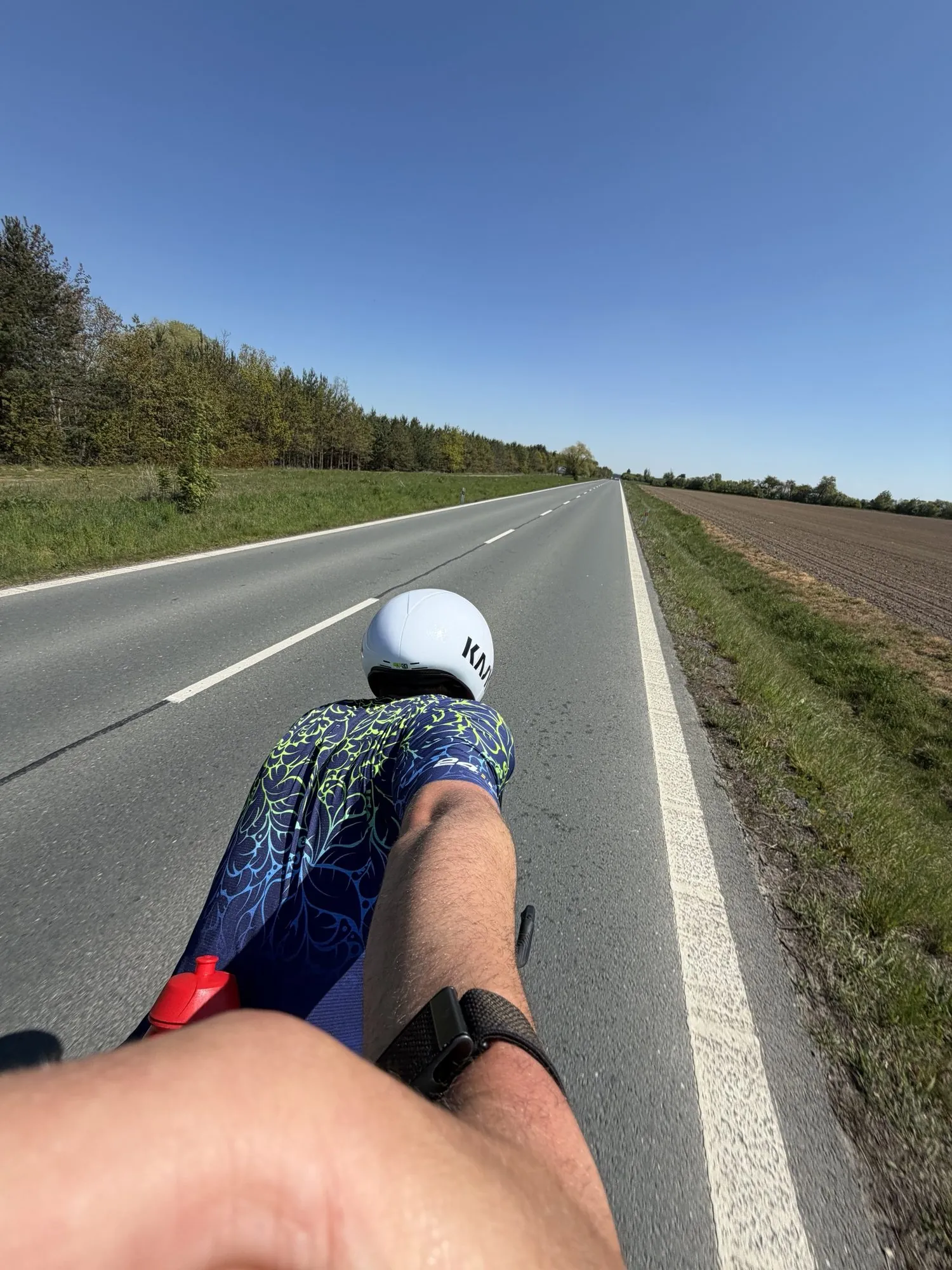
In a normal week I aim for 22 to 25 hours of training. When university or work gets busy, 17 to 20 hours is enough. The split is steady: four swims, four rides, four runs and two gym sessions.
I like to start the week gently, not just in training but at school and work too. After a hard weekend the body needs to wake up and get ready for the days ahead.
The week, day by day
| Day | Training | Purpose |
|---|---|---|
| Monday | easy jog, gym, longer slow swim | recovery after the weekend |
| Tuesday | harder ride or harder run + easy second discipline | first key day |
| Wednesday | harder swim, harder gym | strength in the water and the gym |
| Thursday | medium swim + the hard discipline not done on Tuesday | second key day |
| Friday | swim, endurance ride | volume at an easy pace |
| Saturday | tempo or test session on the bike and run | race pace, checking form |
| Sunday | long sessions | endurance |
I treat Monday’s gym more as endurance work. No heavy weights, just maintenance exercises. Monday’s swim is slow and longer so the body can recover.
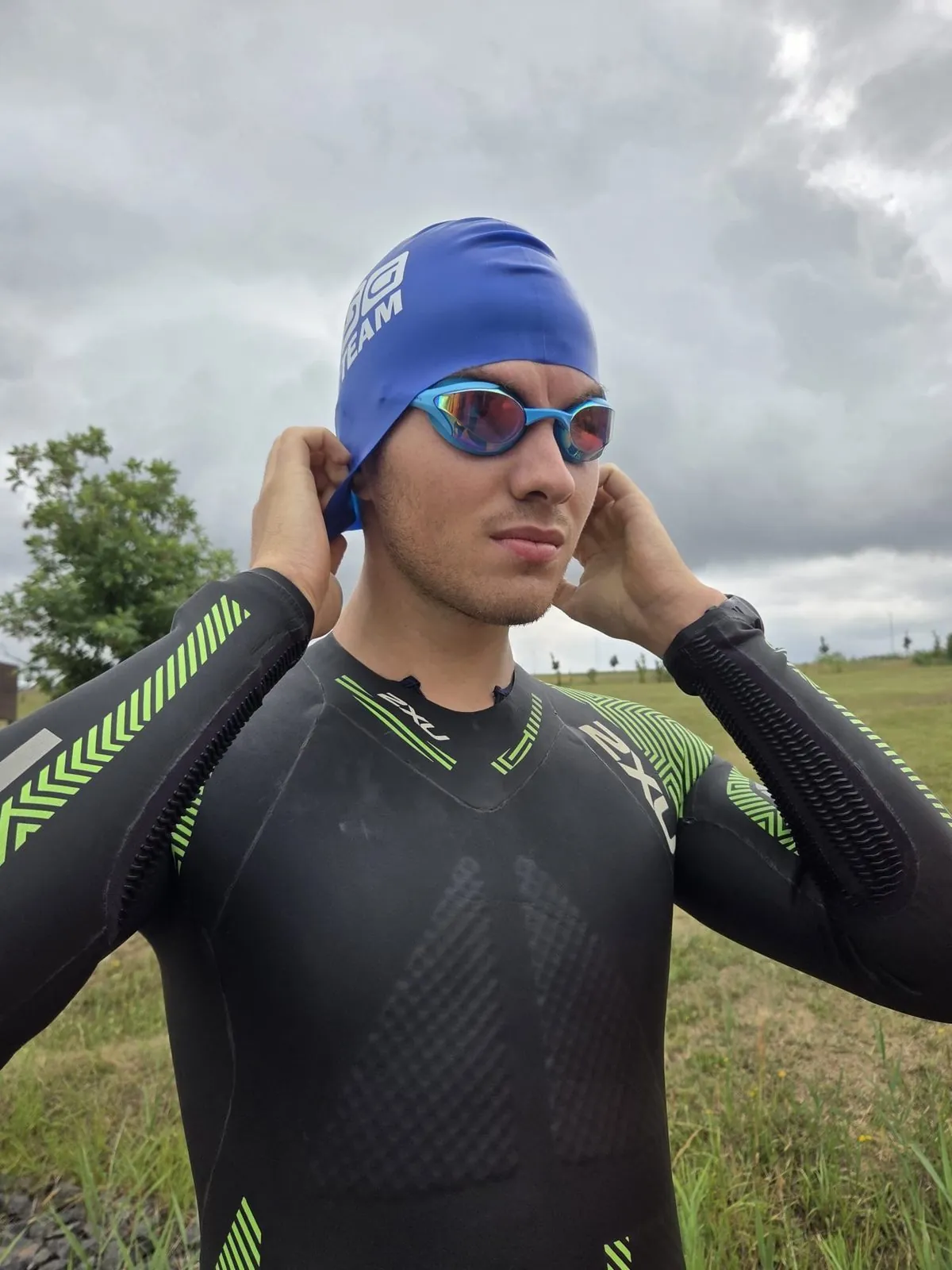
Tuesday and Thursday alternate a hard ride and a hard run. If Tuesday is the hard ride, Thursday brings the hard run, and the other way round. Every hard session comes with an easier spin or jog as recovery.
The weekend is the most important part of the week. Saturday is either tempo or a test. Tempo work teaches me to hold race speed on the bike and the run. A test shows whether my form is moving forward and whether the training is doing its job.
Sunday is for long sessions. A half IRONMAN means 90 km on the bike and then a half marathon, so there’s no way around long training. This is where the endurance the whole race stands on gets built. After a weekend like that, an easier Monday makes sense.
Why I have a coach
At this level and with this volume, I think a coach is a must. It may look unnecessary, but you need someone who oversees your training, supports you and keeps you on track. Above all so you don’t overtrain. At 20+ hours a week the body runs out of energy fast, and overtraining can mean a break of several months.
I’ve been training under coach Tomáš for about half a year. I’m very happy and wouldn’t hear a word against him.
Recovery
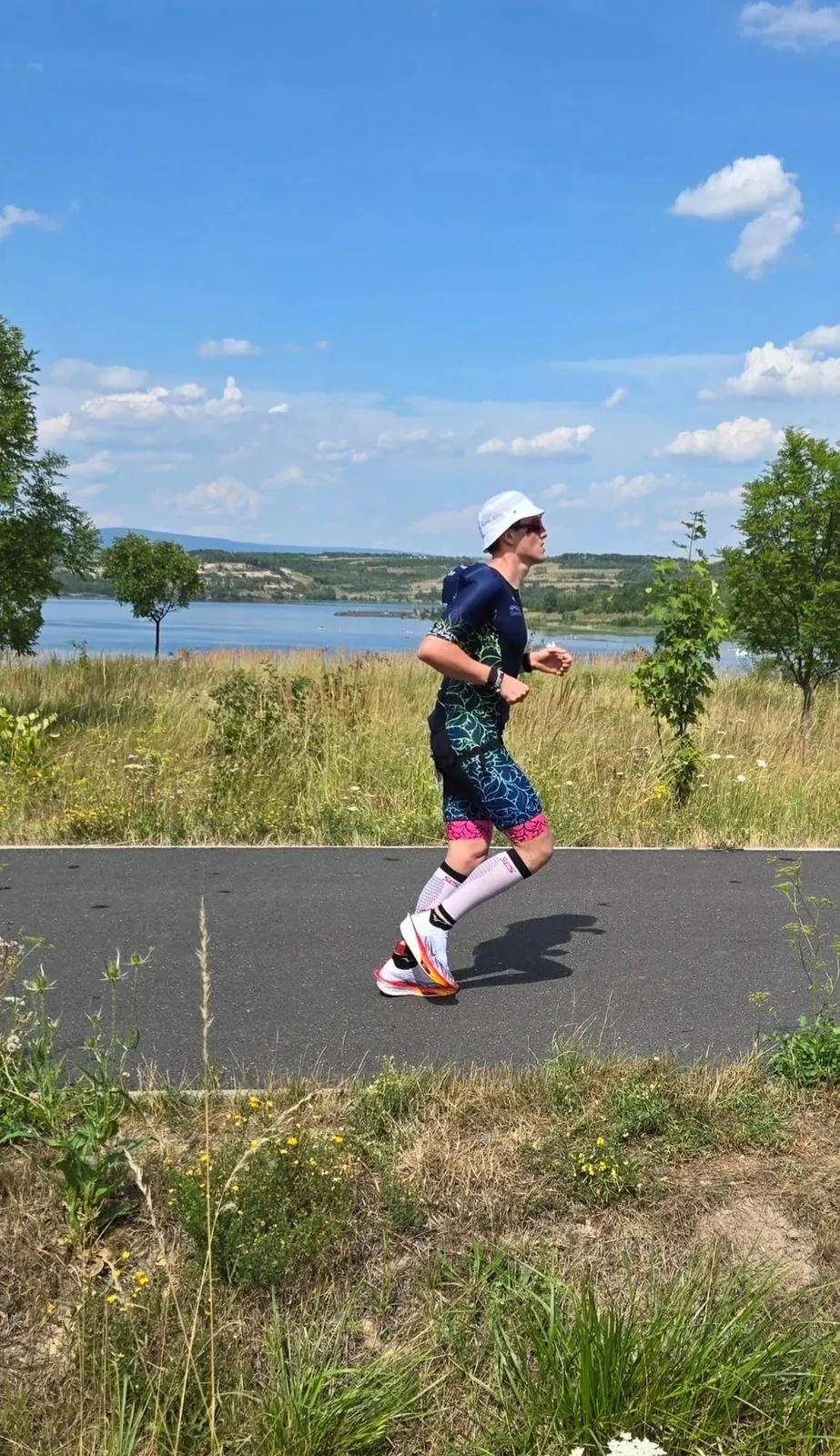
Sleep and food matter most to me. I don’t do much classic stretching. I’m more into mobility work and supplementary exercises for each discipline. For me that’s mainly around the hip, which was weak for a long time. Regular strength work there has helped more than anything.
Winter: the base for the whole season
Over winter the sessions get harder and longer. We build the fitness I then use all season. At the start of winter training, where I am now, there’s a lot of strength and explosive work. As winter goes on, more intervals and longer sessions come in.
My biggest mistake
For a long time I neglected sleep, mobility and the exercises that hold the body together. My hip paid the price. For three or four years my sciatic nerve flared up about once a year, and then I couldn’t run for a month or two. For a triathlete racing the half distance, that’s a huge loss.
In the end I started strengthening the hip area regularly and with purpose. Today it’s strong enough and the sciatic nerve no longer bothers me. Supplementary exercises are now a fixed part of my week, just like swimming or riding.
My advice to anyone training a lot: sleep and supplementary exercises aren’t a bonus. They’re training sessions like any other.